久久精品又粗又长又硬少妇毛片_成人亚洲a片v一区二区三区日本_国产成人亚洲综合无码dvd_少妇无码AV无码专区线_国产日韩三级中文字幕_精品国产乱码久久久久久动漫_亚洲啪啪综合av一区_亚洲偷自拍另类一区二区_中文字幕无线码_少爷们的床奴np高h

Welcome to the official website of Dalian Fantai General Equipment Co., Ltd!

Production of large steel structural components and 

components for small and large equipment

TEL:

+86 0411-87380239

Dalian Fantai General Equipment Co., Ltd

Key Points of Wind Power Equipment Welding Process: Dual Control Techniques for Welding Precision and Strength

* : * : admin * : 2026-01-21 13:38:35 * : 0
Key Points of Wind Power Equipment Welding Process: Dual Control Techniques for Welding Precision and Strength

Wind power equipment operates in harsh outdoor conditions for a long time, and some offshore models also need to resist corrosion and wind-wave erosion. Welding quality directly determines the structural stability and service life of the equipment. Among them, welding precision and strength are the core control points of the welding process. The two are complementary and require scientific and standardized operations and control techniques to achieve dual protection, laying a solid foundation for the long-term safe operation of wind power equipment.

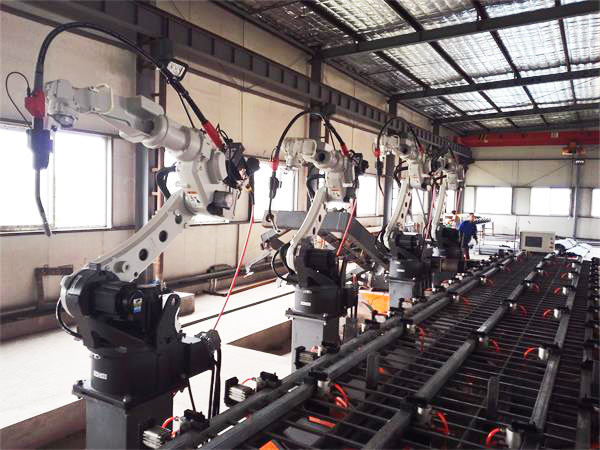
The control of welding precision must run through the entire welding process, with the core of avoiding dimensional deviation and deformation. In the early stage, it is necessary to accurately control the cutting precision of parts, strictly check the dimensional parameters to ensure the fit of the parts to be welded; in the assembly stage, use special positioning tools to fix the position of parts, reduce assembly deviation, and reserve a reasonable welding gap to meet the needs of different weld types. During the welding process, control the stability of welding current, voltage and welding speed, adopt segmental welding and symmetrical welding techniques to reduce part deformation caused by welding stress, and timely clean the weld reinforcement and spatter after welding to ensure the weld formation is regular and meets the precision standards.


17012241438369734.jpg

The key to controlling welding strength is to ensure the load-bearing capacity of the weld and eliminate defect hazards. First, select welding materials matching the material of wind power equipment, preferably high-strength welding wires and fluxes, and clarify the welding process parameters to avoid insufficient weld strength caused by mismatched materials or improper parameters. During welding, ensure that the weld penetration meets the standard, avoid defects such as incomplete penetration and incomplete fusion, focus on controlling the interpass temperature of thick plate welding, and prevent cracks. After welding, non-destructive testing is required. Through ultrasonic, ray detection and other methods, hidden defects such as weld beads, pores and cracks are inspected, and unqualified welds are repaired in a timely manner to ensure that the weld strength meets the load-bearing requirements for the long-term operation of wind power equipment.

In addition, the professional quality of operators and environmental control are also indispensable. It is necessary to conduct professional training for welding operators to standardize the operation process; for outdoor welding, take windproof, rainproof and moisture-proof measures to avoid environmental factors affecting the welding quality. Only by accurately controlling every process detail can the dual compliance of welding precision and strength be achieved, ensuring the stable operation of wind power equipment.