Address: No. 2, Guangfu Road, Ershili Village, Ershilibao Subdistrict, Dalian Free Trade Zone
A Complete Guide to Riveting and Welding Fabrication: Process Key Points, Application Scenarios and Quality Control
*
:
*
:
admin *
:
2025-12-31 9:14:17 *
:
4
A Complete Guide to Riveting and Welding Fabrication: Process Key Points, Application Scenarios and Quality Control
Riveting and welding fabrication is a core mechanical processing method that combines riveting and welding technologies. With the advantages of firm connection and strong adaptability, it is widely applied in various industrial fields. Mastering its process key points, application scenarios and quality control methods can help give full play to the value of this technology. This article will take you to quickly understand riveting and welding fabrication from three core dimensions.
The core process key points of riveting and welding fabrication need to balance "precision" and "adaptability". In the riveting process, it is necessary to control rivet selection, hole diameter matching and tightening force to ensure uniform stress distribution at the connection; in the welding process, welding parameters should be adjusted according to material characteristics (such as carbon steel, stainless steel, aluminum alloy), and welding temperature and speed should be controlled to avoid defects such as cracks and porosity. At the same time, the principle of "positioning first, then processing" should be followed, and workpieces should be fixed by tooling fixtures to ensure processing precision.
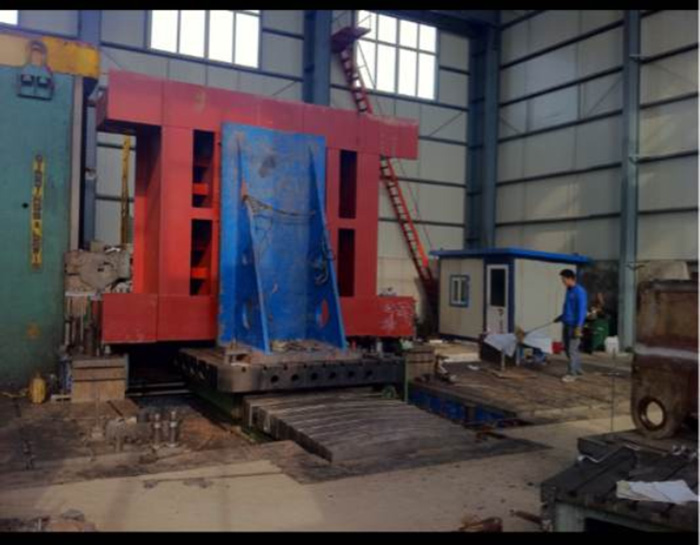
The application scenarios of riveting and welding fabrication cover various industrial fields. In the construction machinery field, it is used for the processing of structural components such as frames and booms of excavators, cranes and other equipment; in the pressure vessel field, it is suitable for the sealed connection of storage tanks, boilers and other equipment; in the rail transit field, it is applied to the assembly of carriage skeletons and chassis components; in addition, it is also widely used in steel structure buildings, shipbuilding, agricultural machinery equipment and other scenarios, especially suitable for the connection processing of large-scale and heavy-load structures.
Quality control is a key link in riveting and welding fabrication. It is necessary to establish a full-process quality inspection mechanism, verify material certificates when raw materials enter the factory; use non-destructive testing (such as ultrasonic testing, radiographic testing) to check welding defects during processing; test connection strength, dimensional accuracy and appearance quality in the finished product stage. At the same time, standardize operating procedures and improve the professional skills of operators to ensure processing quality from three aspects: process, testing and personnel.
In summary, the core of riveting and welding fabrication lies in process precision, scenario adaptability and strict quality control. Grasping the above key points can give full play to its technical advantages and provide reliable structural connection guarantees for various industrial products.